From individual to collective, from voluntary to mandatory data collection
---- Background data
In post-pandemic era, Health Code emerged to authenticate the health of people's bodies in a mobile environment as a tool. Health Code is defined as "a sequence of numbers or letters tied to a resident identity network trusted credential that expresses the user's authorization for another person or organization to temporarily access specific personal health information. A two-dimensional barcode is usually used as its storage medium". For ease of presentation and understanding, an example of how a Health Code is presented in a mobile device, using red, yellow, and green colours to indicate health status information, is also provided.
Users can fill in their name, ID number, travel path and other personal information online to independently declare and obtain a QR code. After a declaration, the platform will continue to track and update the user's personal information in time.
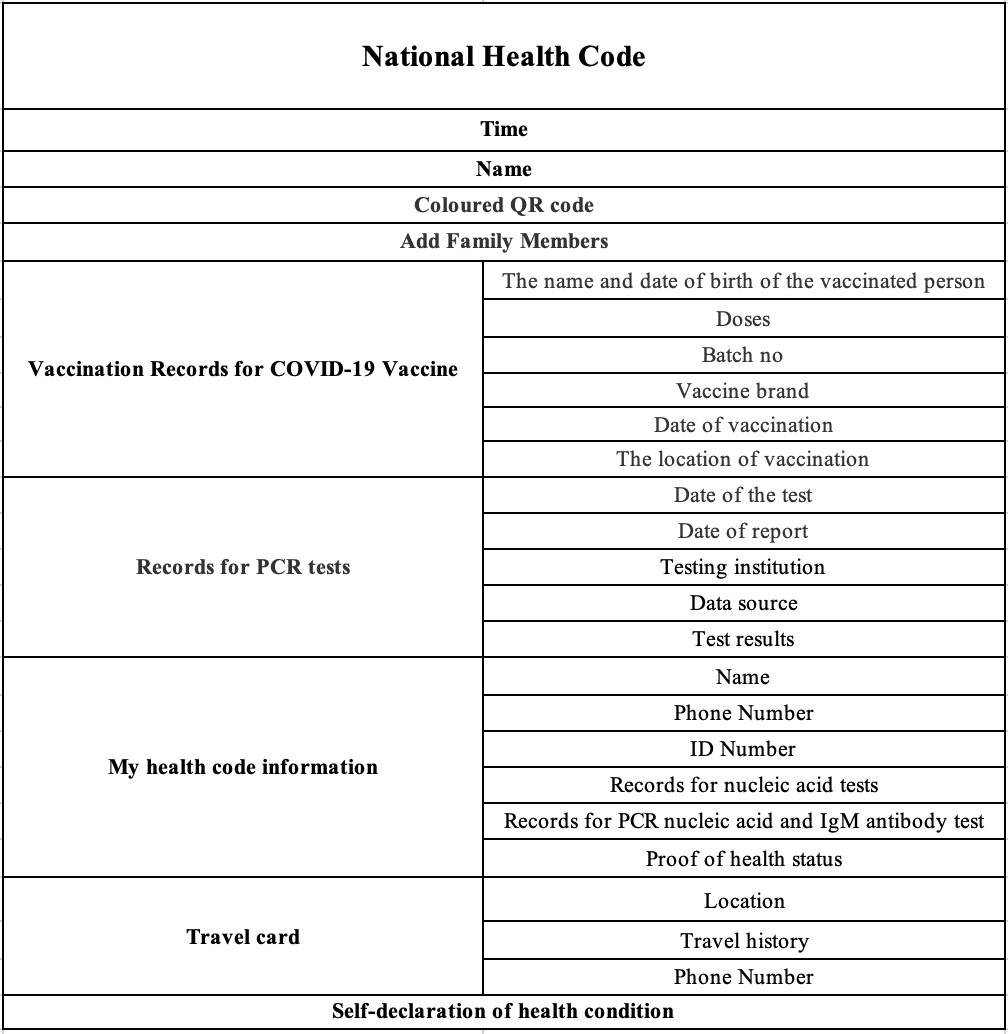
The Health Code platform is mainly divided into six parts.
Firstly, users’ personal information, like name, ID number. Secondly, Health Code, which include current time, and whether users are in risk areas. Users can also check Health code for the elderly and young people in this part. Thirdly, Covid-19 Vaccination Record, in this part, users can check their PCR test and antibody result, Vaccination record, Regional Health Code. Fourth, Big Data Travel Card, users’ Phone number, Location, Travel history are recorded in this part. Fifth, Close Contact With Passengers, which include users’ travel information, like the fight number. The last part is Health Code Travel Version, users can use it in China or overseas.
The main function of the KEEP application is to collect body information provided by the user himself, such as height, weight, etc. It also provides monitoring of the user's health status, such as heart rate, body fat percentage, etc. It also provides monitoring of the user's health status, such as heart rate, body fat percentage, etc. It also tracks the user's exercise status, such as steps, calories burned, etc.
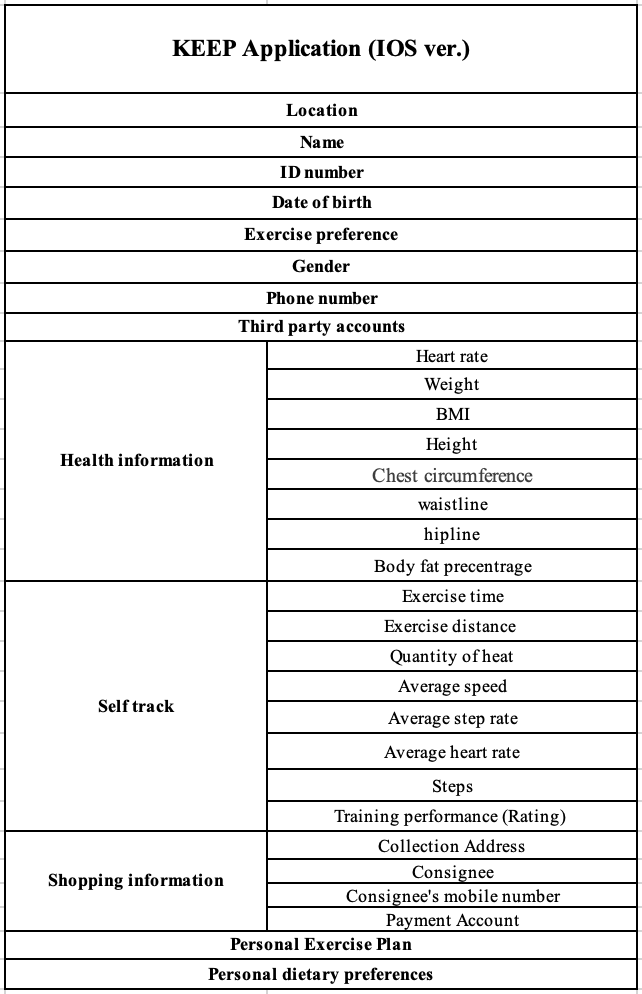
Based on the data collected from users, it generates different sessions for individual selection. The sports section of KEEP includes “running”, “yoga”, “walking” and “cycling”, which can show that KEEP offers a wide range of sports. More detailed requirements from individual users can also be realized based on this comprehensiveness. For example, the course provides screening contents such as targets, body parts and equipment, allowing users to conduct targeted reinforcement exercises. From this point of view, the core of the diversified setting of different sports categories is to satisfy the individual demands of users.
KEEP users' sports experiences, and daily lives are often integrated with data. They voluntarily use data to express and perceive their lives and manage their bodies digitally. KEEP users believe that the body needs personal recording and management, and quantified numbers are more likely to guide individuals' exercise and lifestyle habits over the long term.
Go back to the previous page